Dare to understand! · جرأت کن بفهمی!

Freedom of Conscience: The Right Beneath All Rights
Before we can speak, worship or vote freely, we must first be free to think. Why freedom of thought, conscience and belief is the foundation on which other human rights depend.
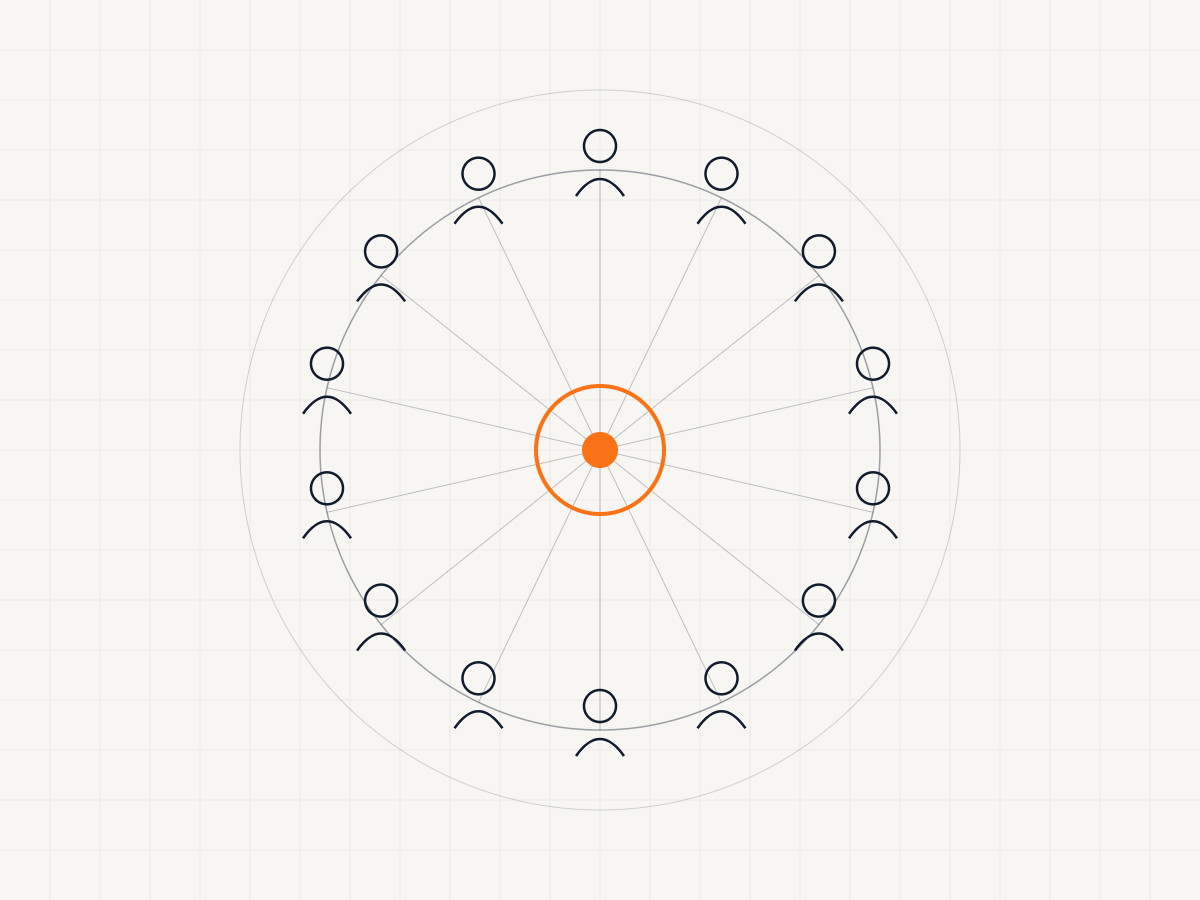
Among all human rights, one is so basic that it is easy to overlook: the right to think for oneself. Before we can speak freely, worship freely, or vote freely, we must first be free to form our own beliefs about the world. Freedom of thought, conscience and belief is the quiet foundation on which many other freedoms rest.
What Freedom of Conscience Means
Freedom of conscience means that no one — no state, clergy, family or community — has the right to force a person to hold, or to abandon, a belief. It covers religious belief and non-belief equally. It protects the believer who wishes to practise their faith, the person who wishes to change religion, and the person who wishes to have none at all. It also includes the freedom to doubt, to question, and to remain undecided.
There is an important distinction here. Our actions can reasonably be limited when they harm others. But our thoughts and inner convictions harm no one by themselves. A state that punishes people for what they believe is not protecting society; it is claiming ownership of people’s minds.
What International Law Says
This principle is not a Western invention or a private opinion. Article 18 of the Universal Declaration of Human Rights, adopted by the United Nations in 1948, states that everyone has the right to freedom of thought, conscience and religion, including the freedom to change one’s religion or belief. The same right is protected as binding law in Article 18 of the International Covenant on Civil and Political Rights (1966), which Afghanistan has ratified.
The UN Human Rights Committee, which interprets the Covenant, has made clear that this protection covers theistic, non-theistic and atheistic beliefs, as well as the right not to profess any religion or belief. It has also stated that no one may be compelled to reveal their beliefs, and that the freedom to hold a belief cannot be restricted at all — not even in times of emergency.
Why It Comes First
Consider what happens when freedom of conscience is denied. Freedom of expression becomes meaningless, because people cannot say what they are forbidden to think. Education becomes indoctrination, because questions are replaced by required answers. Science cannot progress, because inconvenient discoveries are suppressed. And democracy cannot function, because citizens cannot freely form the opinions on which their choices depend.
A society that controls what its people may believe has already taken away every other freedom in advance.
Where It Is Denied
Despite these commitments, freedom of conscience remains one of the most widely violated rights in the world. In a number of countries, leaving one’s religion (apostasy) or criticising religion (blasphemy) is a criminal offence, in some places punishable by death. Even where the law is silent, social pressure can be just as harsh: people who doubt or leave their inherited faith may face rejection by their families, loss of work, violence, or exile.
Many Afghans know this reality personally. For them, the right to think freely is not an abstract principle in a UN document; it is the difference between living honestly and living in fear. Defending it means defending real people — students, writers, women, religious minorities, and non-believers — whose only “crime” is to hold a belief that others do not share.
What It Asks of Us
Freedom of conscience is not only something we demand from governments. It is also something we practise in our own lives. It asks us to allow others the same freedom we want for ourselves: to let our children question, to let our friends disagree, to criticise ideas without dehumanising the people who hold them. It asks believers and non-believers alike to accept that the only legitimate way to change someone’s mind is through reasons, never through force.
A free mind is the beginning of a free society. Protecting the right to think is therefore not one cause among many; it is the precondition for all the others.
Further reading
On this site:
Sources and further study:
- Universal Declaration of Human Rights (United Nations)
- International Covenant on Civil and Political Rights (OHCHR)